
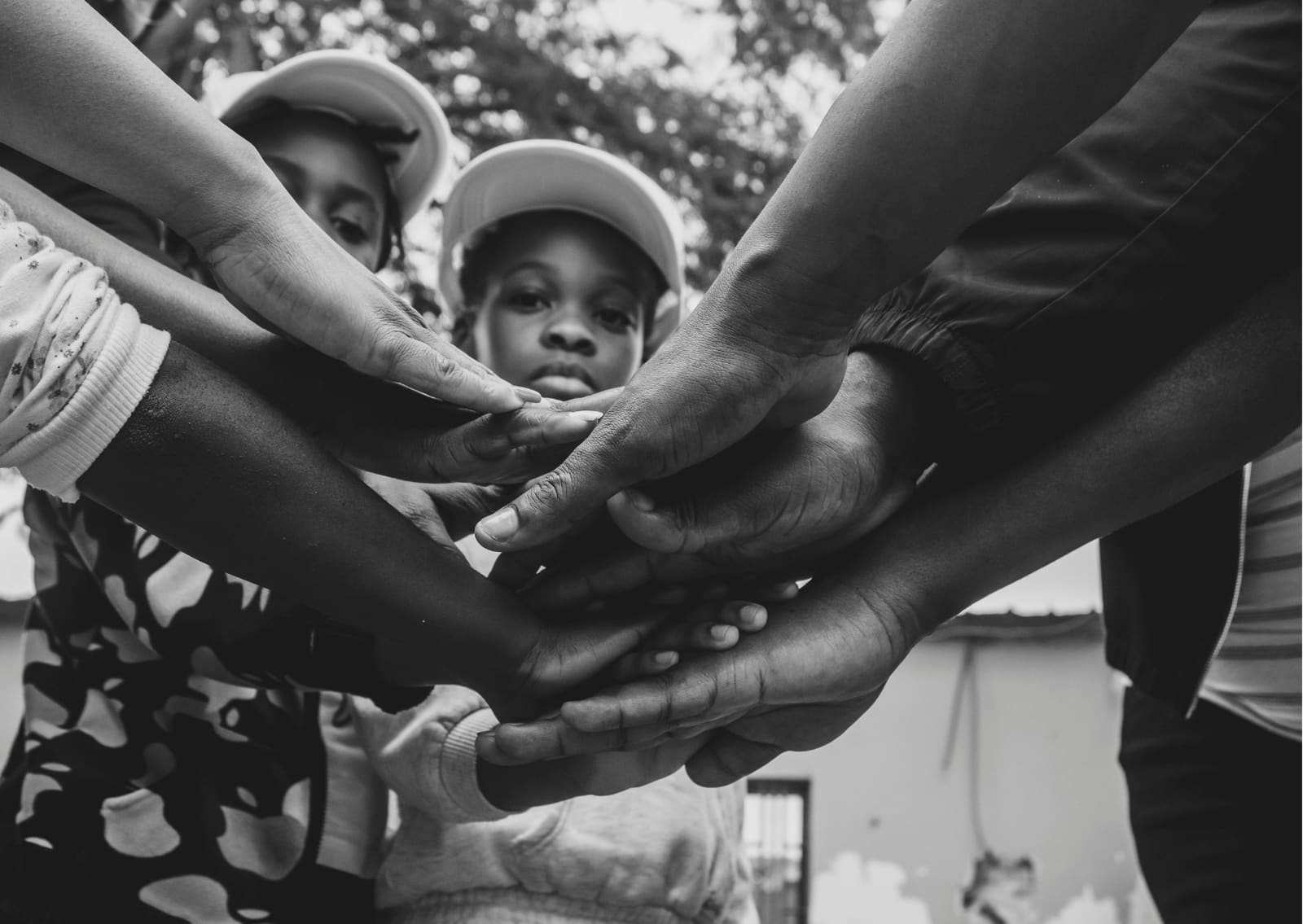
Carry elders’ wisdom about living together to young people — and give young people a respectful way to question what they have inherited.
- Formats
- Main episodes · Ask an Elder · What I’d Tell My Younger Self · Letters Across Generations · 64 Voices, One Future
- Rhythm
- Two main episodes a month (weeks 2 and 4) and one Ask an Elder clip a week
- Languages
- Recorded in the language the elder chooses, with an English summary or subtitles
- Where to listen
- WhatsApp audio, Facebook, YouTube, community radio, and club and circle sessions
- Hosts
- Young people aged 18–35, trained to the programme’s standard; our founder hosts the first episodes
- Anonymity
- Anyone can take part voice-only, with no name and no photograph
Why this programme
Wisdom that is disappearing
Elders hold knowledge that is disappearing: how disputes were settled before guns were everywhere, how communities shared land and water, how people from different groups married, traded and buried each other. Young people rarely hear it — and when they do, it often comes with the grievances too.
Many families pass down enemies along with wisdom. A structured, respectful conversation lets young people ask what they were taught and whether it was true, and lets elders say what they want the next generation to carry — and to leave behind.
Hearing an elder from another community speak with warmth about the past is one of the most direct ways to humanise people who have been turned into strangers. Audio suits South Sudan’s oral traditions, low-data phones and community radio.
What we aim to do
- Record and release ten main episodes and at least ten short clips during the pilot.
- Bring young people and elders into respectful exchange, including across communities.
- Document traditional practices for preventing and resolving conflict.
- Begin the 64 Voices, One Future series at a careful, steady pace.
- Train at least three youth hosts to run interviews to our standard.
The 64 Voices closing question
What should our children inherit — and what should end with us?
Every 64 Voices episode ends with this question to both speakers. Over time, the answers from many communities become one archive. The figure 64 is widely cited, not an official count — so we will never claim to have heard every community.
Listening closely
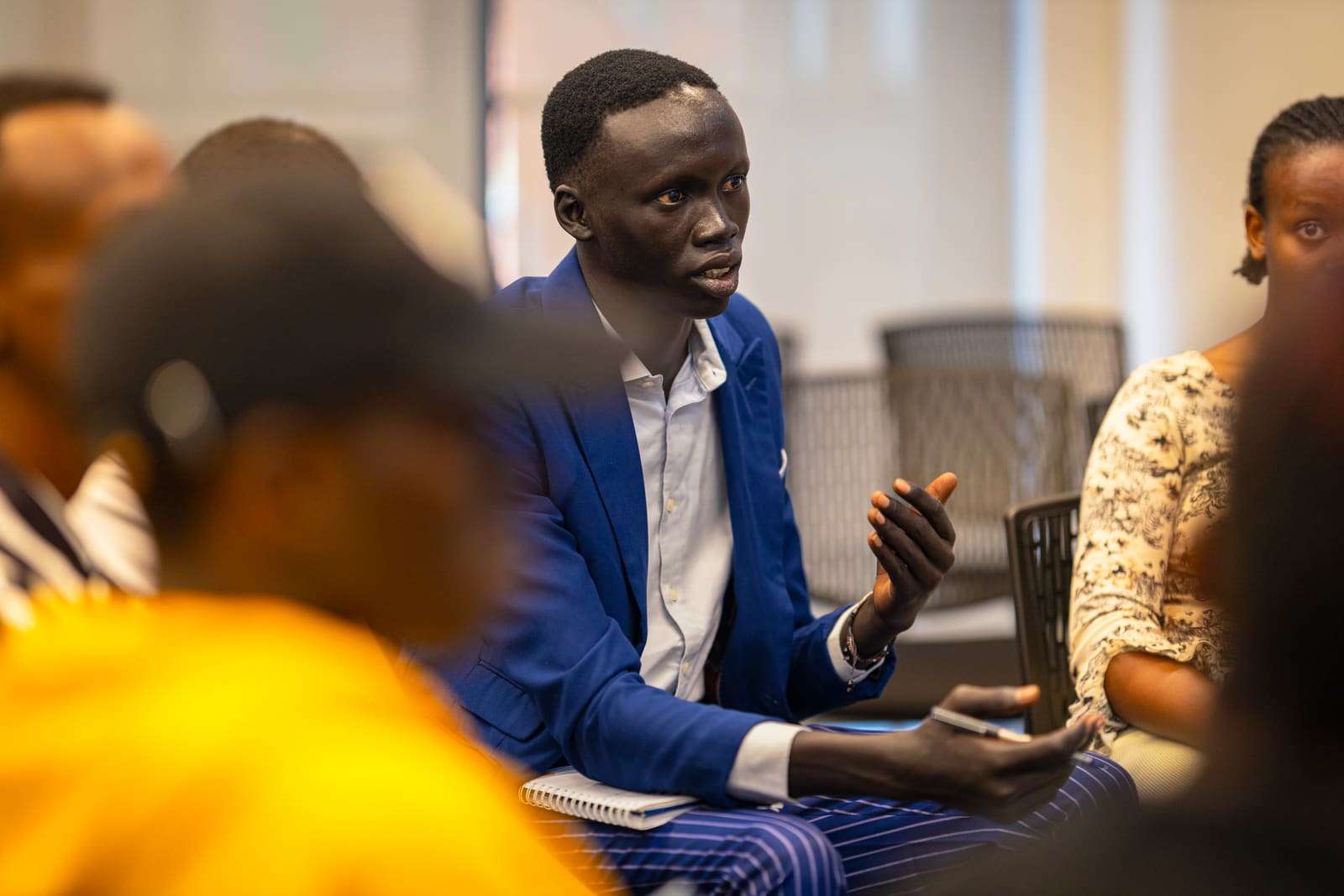
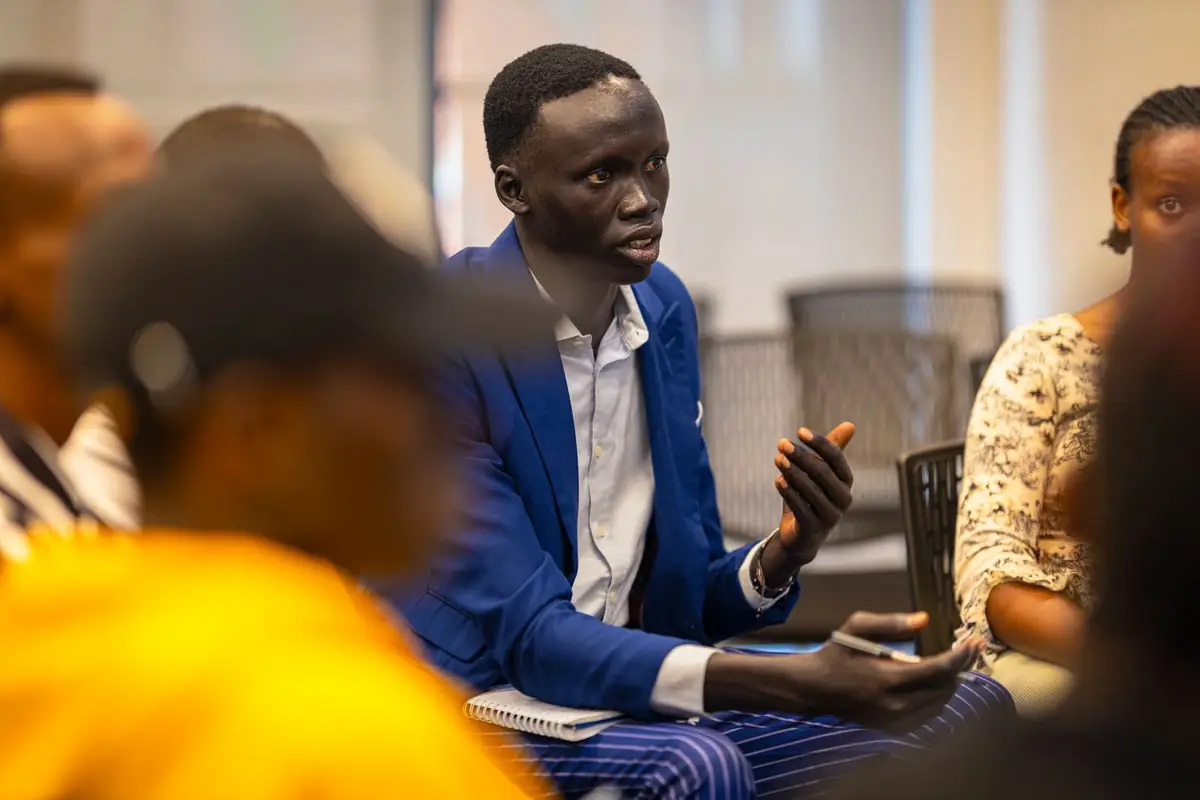
View photo: The founder listening closely during a discussion

View photo: Silhouettes of people holding hands at sunset

A good conversation starts with listening — and ends with what one generation chooses to pass to the next.
Five formats
Ways to listen and take part
Main episode
A young person and an elder talk around one question, sometimes across communities
15–25 minutes, audio or video · two a month
Ask an Elder
One elder answers one question
60 seconds · weekly
What I’d Tell My Younger Self
Elders, and people in their thirties, speak directly to teenagers
1–2 minutes · occasional
Letters Across Generations
An elder and a young person write to each other; read aloud and discussed
At least once, in January
64 Voices, One Future
Each episode features a different community and ends with the same question
Grows slowly · no quota
Episode structure
Inside an episode
- 30 sec
- Cold open — the strongest line from the conversation.
- 1 min
- Introduction — the theme and both speakers, named as they wish.
- 5–7 min
- Remember — what was life, and peace, like when the elder was young?
- 5–7 min
- Reflect — what changed, why, and what did we learn?
- 5–7 min
- Pass forward — what should the next generation carry, and what should end with us?
- 1 min
- Close — one action for listeners, and an invitation to send letters and questions.
Questions we ask
Remember
- What did peace look like on an ordinary day when you were young?
- Who were your neighbours, and how did your families help each other?
- How were disputes settled in your village before guns were common?
- What songs, sayings or customs helped people live together?
Reflect
- What changed, and when did you first notice it?
- Was what you were taught about other communities true?
- What role did women play in keeping the peace?
- What mistake do you see young people repeating?
Pass forward
- What should our children inherit from your generation?
- What should end with us?
- If you could say one thing to every young person in South Sudan, what would it be?
- What gives you hope?
Pilot, October 2026 – February 2027
Month by month
| Month and theme | Episode A | Episode B | Ask an Elder questions |
|---|---|---|---|
| October — Unlearn Hate | “The story I was told”: what elders were taught about other communities, and what they found | How our grandparents settled disputes | Who taught you who your enemies were? / What made a neighbour a friend? |
| November — Lower the Gun, Raise the Voice | What made a man respected before the gun | A cattle-keeping elder and a farmer’s son on sharing land | What does real courage look like? / What did a young man carry before a gun? |
| December — Leadership, Dialogue and Peaceful Public Life | Leadership that people trusted: a chief or teacher with a student leader | Women who kept the peace: a woman elder with a young woman | Which leader did you trust, and why? / How did women stop fights in your youth? |
| January — Healing Without Forgetting | What we remember, and what we release | Letters Across Generations, read and discussed (9 January: anniversary of the 2005 Comprehensive Peace Agreement) | What did peace in 2005 feel like? / What helped you carry grief? |
| February — The Generation That Builds Peace | What we will pass forward: commitments from elders and youth | 64 Voices special: the voices of the pilot | What should our children inherit? / What should end with us? |
Ethics, consent and safety
How we record with care
- We visit or call the elder first, explain the purpose and where the episode will be heard, and agree the language and any topics to avoid.
- Consent is explained in the elder’s own language and recorded at the start of every session.
- Speakers may hear the edit before release, ask for changes that restore their meaning, and withdraw at any time — even after release.
- Anonymity is always offered: voice only, no name, no photograph.
- We never pay for stories. A small token of respect, such as tea or transport, is customary.
- We respect elder protocol: proper greetings and titles, and patience with pauses.
Listen
Latest episodes
Our first episodes are being recorded and reviewed with care. Check back soon.
Honest targets
Our pilot goals
- 10main episodes
- 10+Ask an Elder clips
- 5+communities represented
- 3+languages
- 40%of episodes with women elders, at least
- 3+youth hosts trained
After the pilot
- Peace on Air — a regular radio series built from episodes, with a partner station.
- The 64 Voices archive — a growing, searchable collection of voices from across South Sudan.
- A documentary series with a production partner.
- Live recordings at Peace Forums, with an audience of young people.
- A book of the best conversations, in the languages spoken and in English.
Get involved
Where you can contribute
Families and communities
Nominate an elder whose wisdom about living together should be heard. We explain everything in their language first.
Nominate an elderElders
Share what peace looked like in your youth, answer one question for Ask an Elder, or write a Letter Across Generations.
Take partYoung people, 18–35
Become a youth host: prepare questions, conduct interviews and help with clips. We train you first.
Become a youth hostInterpreters and translators
Help us record elders in their chosen language and check translations for meaning.
VolunteerListeners
Listen, share episodes on WhatsApp, and send us the questions you want elders to answer.
Listen to episodesCommunity radio stations
Air radio-ready cuts of each episode, free of charge.
Get radio files