
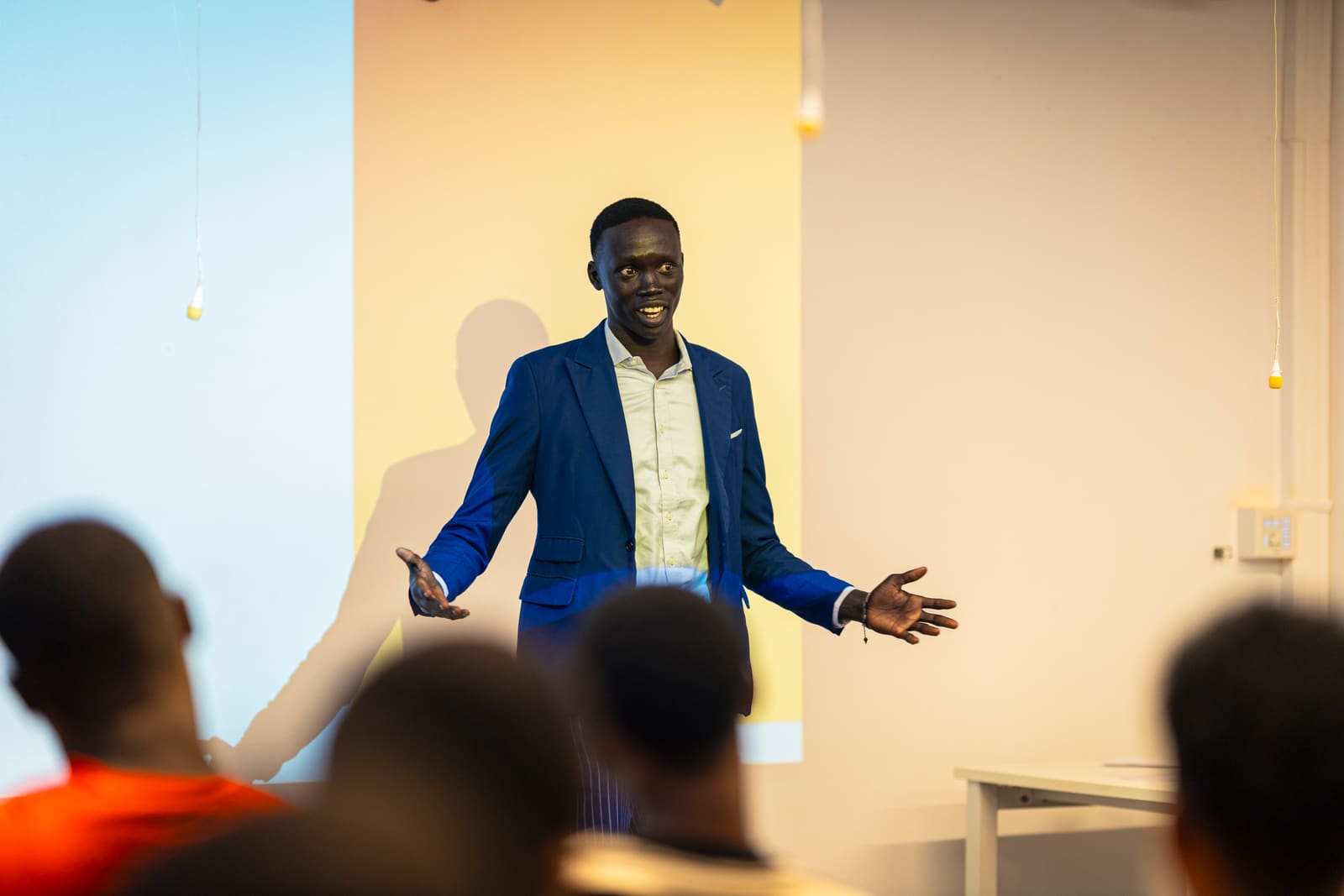
Every session pairs a peace topic with a skill you can use straight away.
- Purpose
- Give young South Sudanese direct access to credible expertise on peace and practical skills for their future
- Format
- 45–60 minutes: a 20-minute talk, 20–25 minutes of youth questions, and one action for the week
- Rhythm
- One session a month, in the last week of the month, in the early evening (South Sudan time)
- Where
- Live on Facebook; audio on WhatsApp within 48 hours; short clips; a free radio version; watch parties
- Who it’s for
- Youth leaders, students, club and circle members, diaspora youth — and anyone interested
- Cost to take part
- Free. No new app to install
Why this programme
Expertise, without the cost of a room
Most young South Sudanese will never sit in a room with a peacebuilding expert, a fact-checker or a successful entrepreneur. Online sessions remove the cost of travel and let experts inside the country, in the diaspora and elsewhere in Africa give an hour of their time.
Peace is more convincing when it comes with practical skills and a sense of a future — so every session pairs a peace topic with a skill: checking a claim, disagreeing without escalating, speaking in public, turning an idea into a project.
What we aim to do
- Hold five well-run sessions during the pilot, each tied to the month’s theme.
- Reach young people with little data through audio, clips, radio and group watch parties.
- Put young people’s voices at the centre: a youth co-host every session and questions from the audience.
- Connect online learning to offline action through clubs, circles and the weekly action.
- Build a network of trusted speakers for in-person Peace Forums after the pilot.
A room, and a founder listening
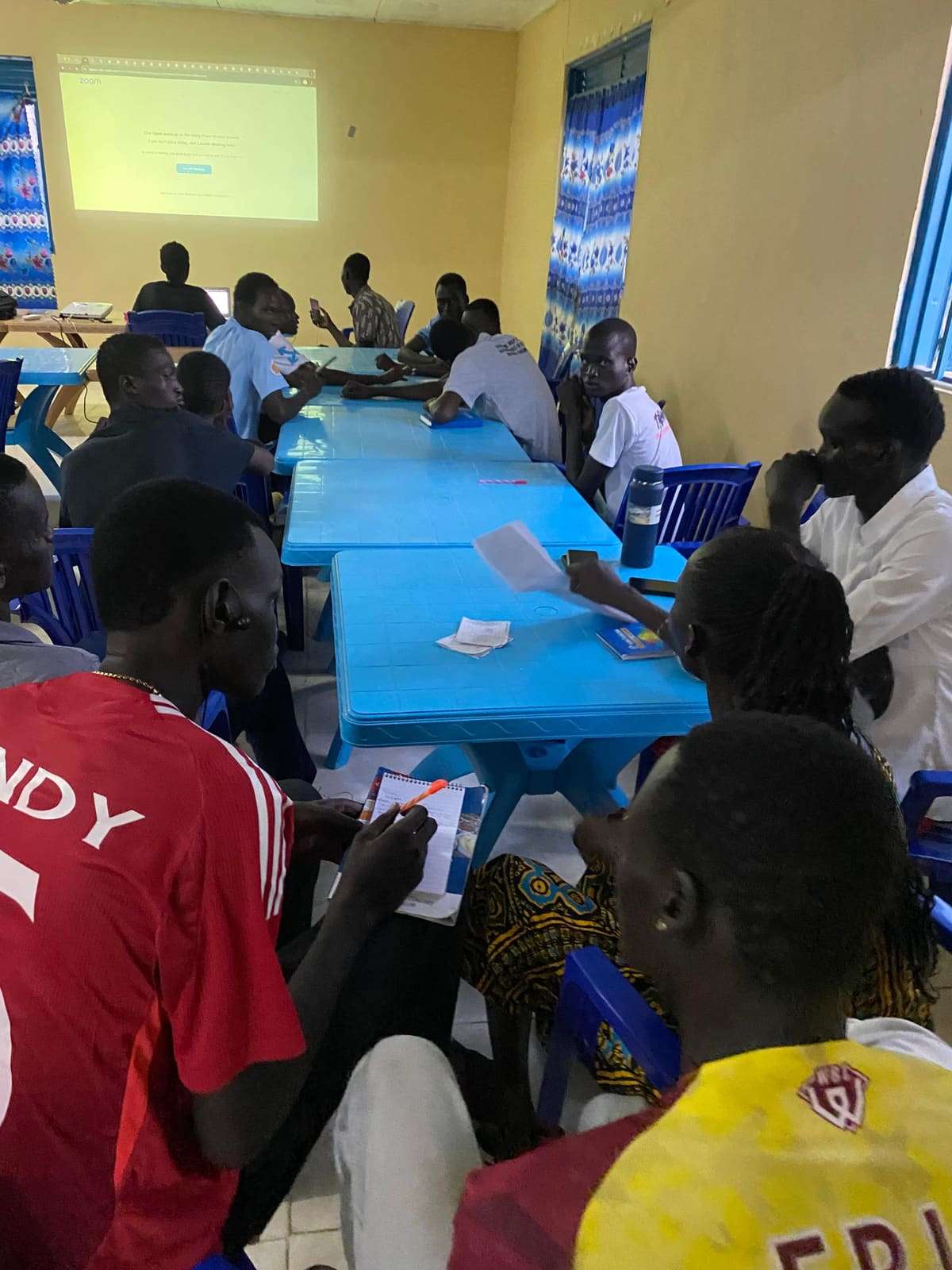
View photo: Participants listening at a workshop
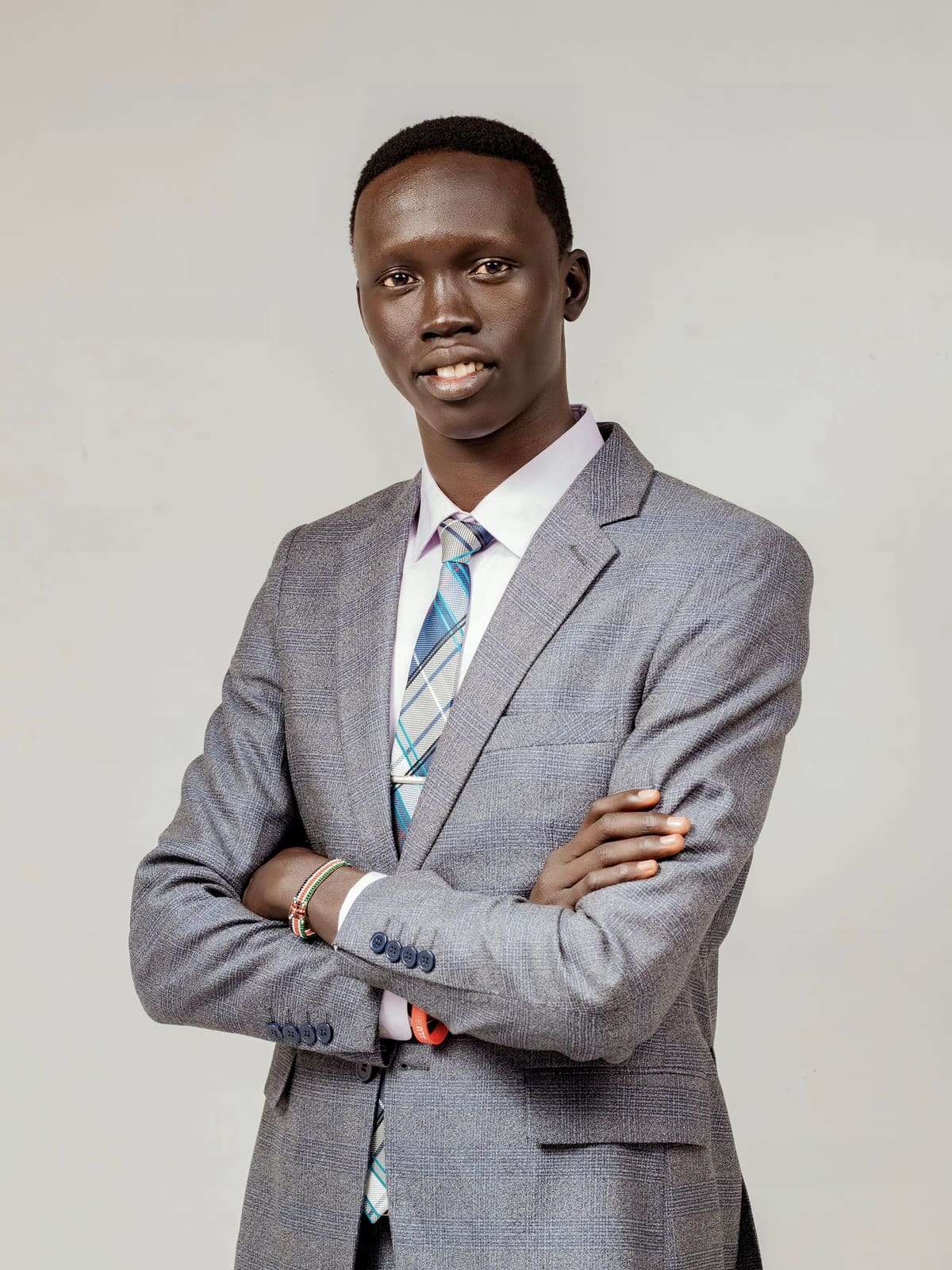
View photo: Kur Peter Thon Aduot, founder of Peace Across Generations, in a grey suit
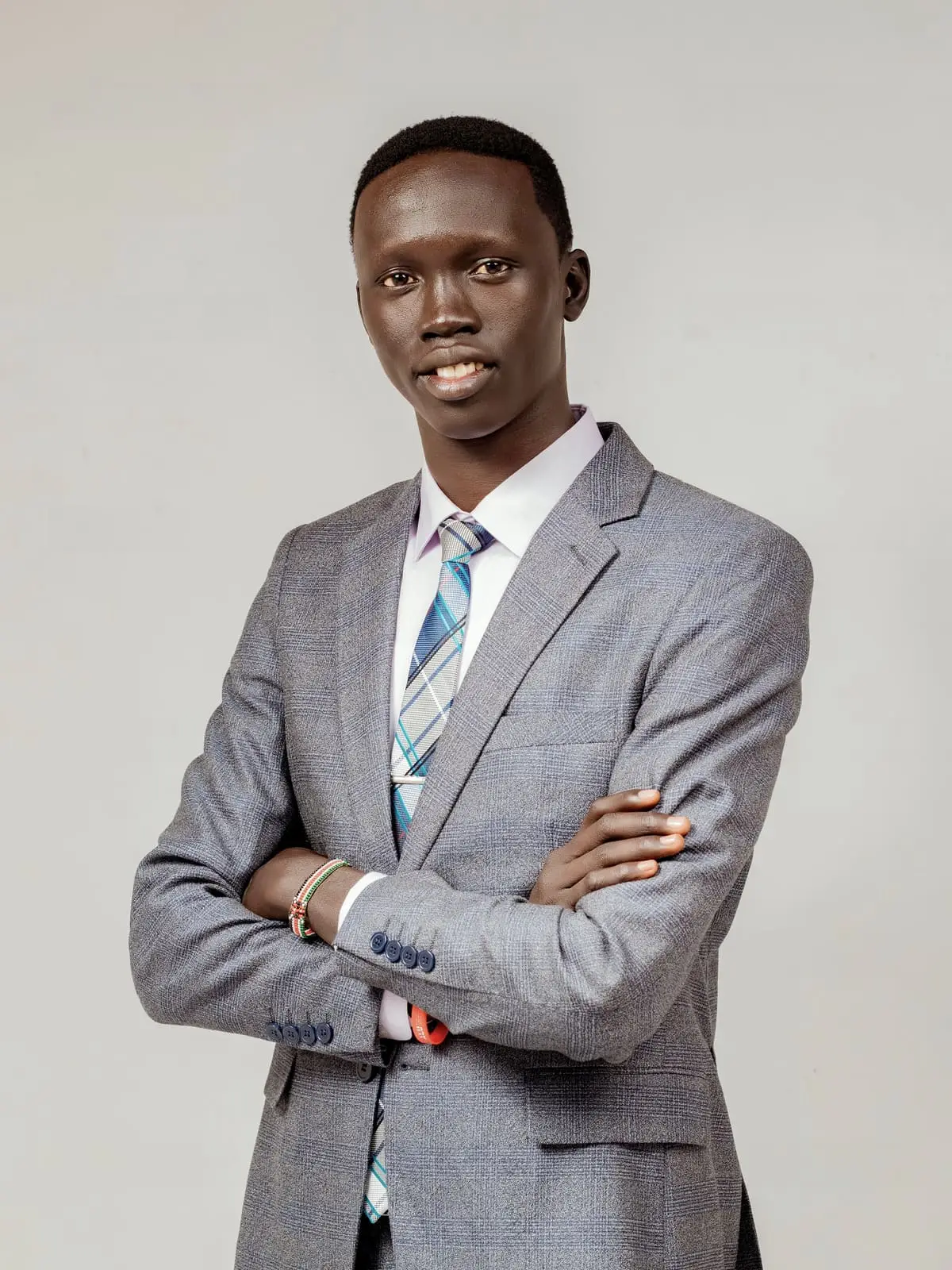
Peace Talks brings an expert, a room full of young people, and questions that get answered.
Run of show
What happens in a session
- 0–3 min
- Welcome — the youth co-host introduces the theme, the session rules and how to send questions.
- 3–5 min
- Introduction — why this topic, why this speaker.
- 5–25 min
- The talk — one story, one sourced fact, one practical skill.
- 25–48 min
- Your questions — screened questions, with priority to young people, women, remote participants and watch parties.
- 48–53 min
- One action this week — a single, safe, specific thing everyone can do.
- 53–55 min
- Close — next month’s theme and the creative call.
Questions and moderation
- Questions that accuse a named person or blame a community are not read out.
- Partisan campaigning, personal data and requests for private contact are removed.
- Hateful comments are hidden — not read aloud and not argued with live.
- If a factual error is made, it is corrected publicly in the session summary.
Youth co-hosts
A different young person co-hosts each session — chosen from Founding Creators, club leaders and circle members. During the pilot co-hosts are 18 or older, and each gets a script card and a rehearsal first.
Designed for South Sudan’s data costs
Built for low data
Facebook Live
The full live session, on a platform most people already use.
Live
WhatsApp audio
An audio-only version under 10 MB, with a three-point summary.
Within 48 hours
Short clips
60–90 second clips of the strongest moments on Facebook, TikTok, YouTube and WhatsApp Status.
The following week
Community radio
An edited 25–30 minute version, offered free to stations.
Within one week
Watch parties
A club, circle or group of friends watches together on one device — one data bundle for the whole group.
Live or within the month
How to host a watch party
- Register your watch party with us by the day before.
- Where possible, we support the host with a small data bundle.
- Your group agrees one question to send to the speaker.
- After the session, spend 15 minutes on one discussion question from the co-host.
- Tell us how many people attended and what you discussed.
One phone. One projector. Thirty people. The conversation after the talk is often more valuable than the talk itself.
Register a watch partyPilot, October 2026 – February 2027
Topics and skills, month by month
Topics are confirmed; speakers will be announced.
| Month and theme | Peace topic | Practical skill | Speaker profile |
|---|---|---|---|
| October — Unlearn Hate | How hate speech spreads online | Checking a claim in two minutes | Fact-checker or media-literacy trainer |
| November — Lower the Gun, Raise the Voice | Courage without guns: masculinity, cattle and community safety | Disagreeing without escalating | Peacebuilding practitioner or respected traditional leader |
| December — Leadership, Dialogue and Peaceful Public Life | Leading without dividing: young people in civic life | Public speaking | Youth leader with civic experience |
| January — Healing Without Forgetting | Grief, memory and healing: what helps | Listening well, and knowing where to find support | Mental-health educator (education, not treatment) |
| February — The Generation That Builds Peace | What our generation builds next | Turning an idea into a project | Panel of pilot contributors with an entrepreneur |
Upcoming and past sessions
October 2026 · Upcoming
How hate speech spreads online
[TBD: date] · Speaker: [TBD: to be announced]
November 2026 · Upcoming
Courage without guns: masculinity, cattle and community safety
[TBD: date] · Speaker: [TBD: to be announced]
December 2026 · Upcoming
Leading without dividing: young people in civic life
[TBD: date] · Speaker: [TBD: to be announced]
January 2027 · Upcoming
Grief, memory and healing: what helps and where to find support (education, not treatment)
[TBD: date] · Speaker: [TBD: to be announced]
February 2027 · Upcoming
What our generation builds next — a panel of pilot contributors
[TBD: date] · Speaker: [TBD: to be announced]
Who speaks
Our speakers
- Peacebuilding and conflict-transformation practitioners
- Fact-checkers and media-literacy trainers
- Mental-health educators — teaching, not treating
- Youth leaders, community organisers and civic educators
- Traditional and faith leaders
- Entrepreneurs and professionals
- South Sudanese diaspora professionals, and peers from other African countries that have faced similar struggles
Across the pilot: at least two women among five speakers, at least one diaspora or international voice, and more than one community represented.
How we choose speakers
- Credibility
- Real expertise or lived experience, recognised by others
- Non-partisan conduct
- Willing to speak without campaigning for a party, candidate or armed actor
- Clarity
- Able to explain ideas simply to a multilingual youth audience
- Public record
- No history of hate speech, incitement or collective blame
Honest targets
Our pilot goals
- 5live sessions, October to February
- 2+watch parties by a club or circle
- 1+diaspora or international speaker
- 2+women among the five speakers
After the pilot: Peace Forums
The strongest topics can become in-person Peace Forums, starting in Juba or Bor at a partner venue — with the same shape (expert, youth questions, one action) and recorded for everyone who cannot attend.
Get involved
Where you can contribute
Experts and practitioners
Offer to speak on a month’s theme — and bring one story, one sourced fact and one practical skill.
Offer to speakYoung people, 18–35
Co-host a session: open it, run the questions and close it, with a rehearsal beforehand.
Ask to co-hostClubs, circles and friends
Host a watch party on one device and send the speaker your group’s question.
Register a watch partyEveryone
Send a question in advance, or suggest a speaker we should invite.
Send a questionCommunity radio stations
Broadcast the free 25–30 minute radio version of each session.
Get the radio versionUniversities and venues
Help us bring Peace Forums to Juba or Bor after the pilot.
Partner with us